A further operation if the shape or function of the nose is not satisfactory after an earlier procedure. Our doctors offer sensitive and precise revisions to correct undesirable results of earlier procedures, with the aim of a nose that fits naturally and harmoniously into your face.
Brief overview of secondary nasal surgery / revisions of the nose
Duration of surgery
about 4-6 hrs.
Anaesthesia
General anaesthesia
Stay in the clinic
inpatient for 2 to 3 nights
Back out among people
after 2-3 weeks
Stitch removal
after approx. 14 days
Financing
possible through our financing partner
Secondary nasal surgery in Dortmund: revision surgery and aftercare under one roof
Corrective surgery on a nose that has had previous surgery is usually more complex than the first procedure. At the Deutsches Nasenzentrum® of the Westfalenklinik in Dortmund, examination, operation and the two to three nights afterwards take place under one roof: anaesthesia is provided by anaesthetists specialising in plastic and aesthetic surgery, and at night you are looked after by the clinic’s own qualified staff trained in emergency medicine. For surgery, nursing and care, the specialist clinic does not depend on hospital departments or external surgical centres.
The Westfalenklinik is located at Rosemeyerstraße 2–4, directly on the B1/A40 near the Signal Iduna Park. For the check-up appointments after the revision, you can come by car via the Dortmund-Hombruch exit and park on the building’s parking deck directly in front of the entrance, or take the U45 from the main station to Stadtgarten and continue with the U42 to Theodor-Fliedner-Heim. More under Directions.
Treatment
Type of appointment
Appointment
Your details
Confirm
Which treatment are you interested in?
Click on the area you are interested in:
No matching treatment found. Choose “Still undecided?” in an area and we will call you.
This is why patients opt for revision surgery on their nose
Correction of aesthetically unsatisfactory results from earlier nose operations
Remedying functional problems such as breathing difficulties caused by the first procedure
Reduction of pain perception and sensitivity as well as restoration of nasal symmetry and facial balance
Wish for a nose that matches personal ideas of beauty
What is meant by secondary nose surgery or revision surgery on noses?
Secondary nose surgery, also known as revision rhinoplasty or corrective surgery, is a surgical procedure performed to improve or correct the results of an earlier nose operation. Patients opt for such an operation when the first rhinoplasty did not achieve the desired aesthetic or functional success. This can become necessary for various reasons, such as unsatisfactory aesthetic results, asymmetrical nose shapes, breathing problems or the formation of scar tissue that affects the structure of the nose. Secondary nose surgery requires a high degree of expertise and experience, as the anatomical structures have already been altered and present more complex challenges.
What treatment options are there for noses that have had previous surgery?
The treatment options for noses that have had previous surgery are varied and depend greatly on individual needs and the specific problem to be corrected. The most common corrections include:
Methods compared
The most common corrections compared
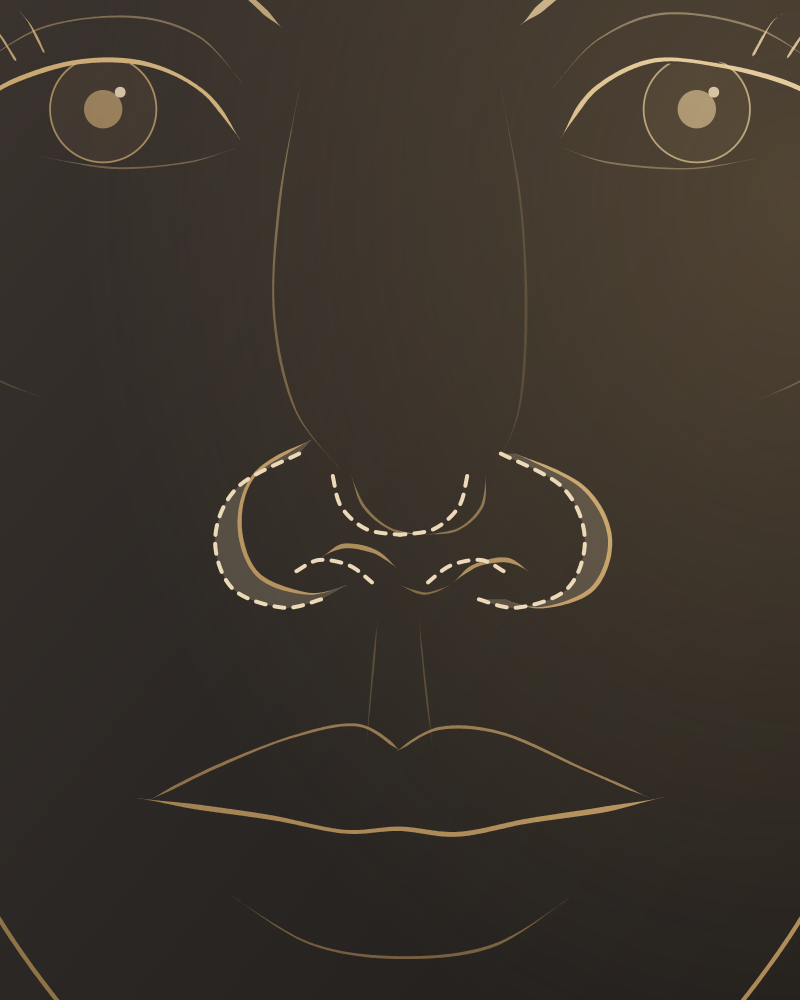
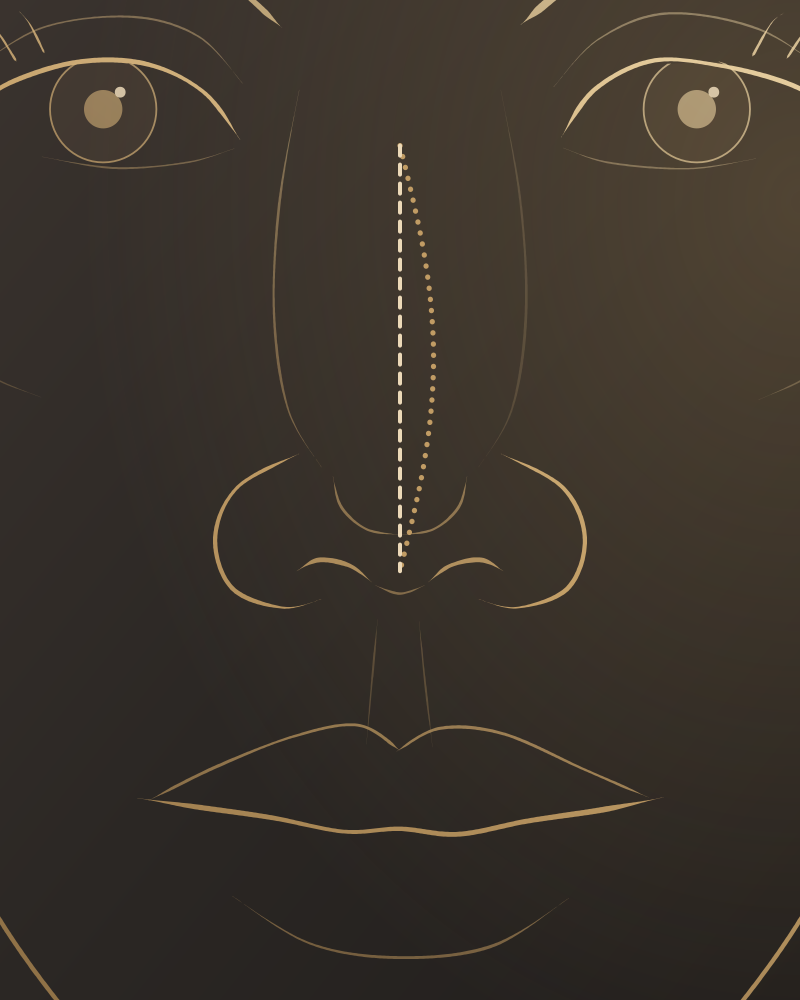
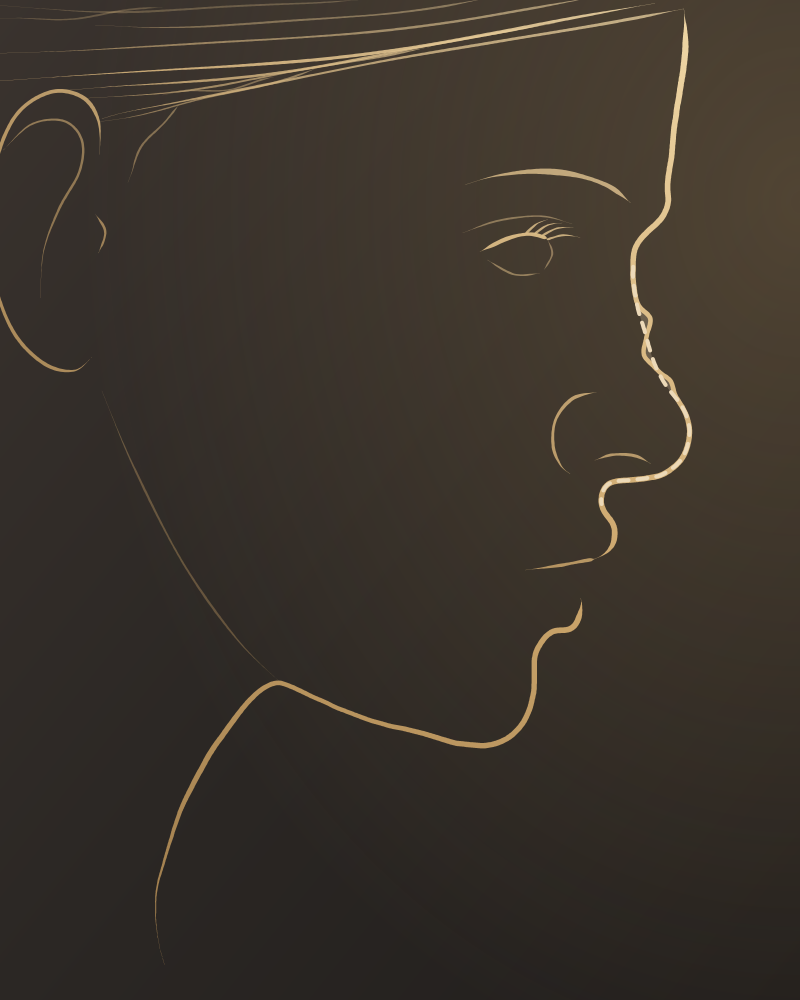
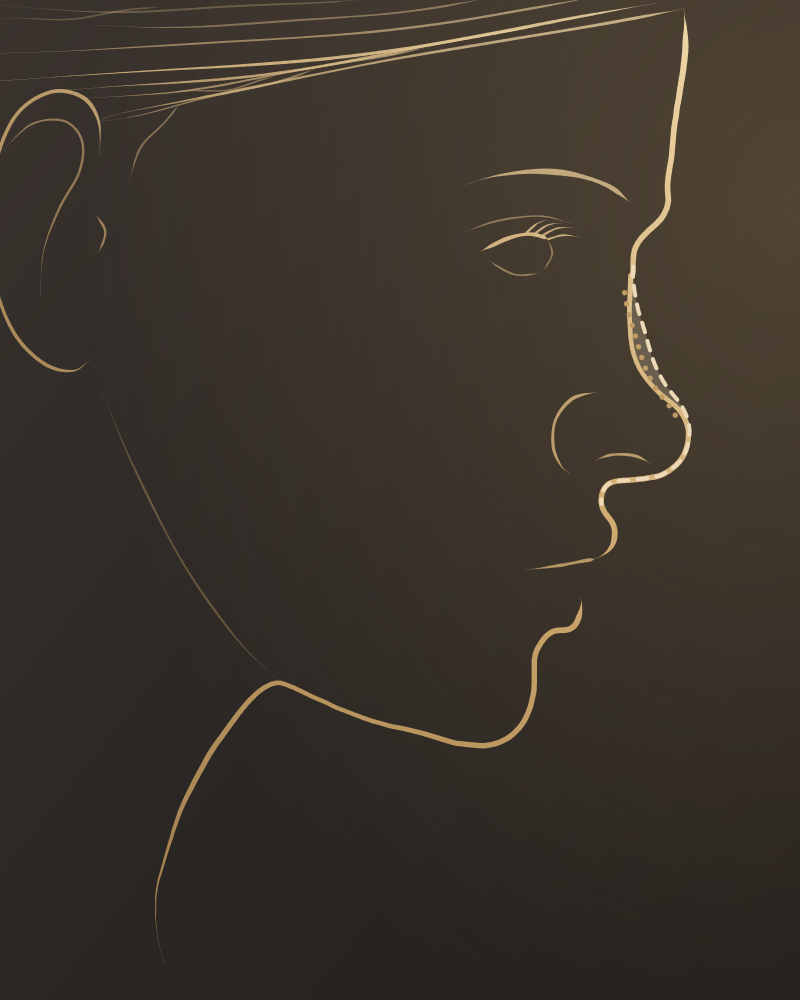
Which corrections are needed depends on your symptoms and wishes; they are often combined in one procedure. The drawings show schematically what changes.
Correction of asymmetries
After an earlier nose operation, irregularities or asymmetries may occur, which can be evened out through precise surgical adjustments.
Procedure on
Irregularities, asymmetries
Aim
a balanced shape
Restoring nasal function
If the first operation led to breathing difficulties, a secondary operation can improve nasal breathing by straightening the nasal passages or widening narrowed passages.
Procedure on
nasal passages, narrowed passages
Aim
better nasal breathing
Correcting scar tissue
Scarring after a nose operation can have a negative effect on the structure of the nose. Revision surgery can remove excess scar tissue and restore the natural shape of the nose.
Procedure on
Scar tissue
Aim
an improved nose shape
Stabilising the nasal structure
In cases where the structure of the nose has become unstable as a result of the first operation, secondary nose surgery can improve the stability of the nose through the use of cartilage grafts or other supporting elements.
Material
Cartilage grafts, supporting elements
Aim
a stable nose
What does corrective surgery involve for a nose that has had previous surgery at the Westfalenklinik?
Treatment of a nose that has had previous surgery begins with a detailed consultation and examination. The surgeon analyses the results of the first operation and discusses the specific problems and the goals of the correction with the patient. At this stage it is important to develop realistic expectations and to understand which improvements are possible.
On the day of the operation, the procedure is usually performed under general anaesthesia. The surgeon opens the nose using either an open or a closed technique, depending on the complexity of the procedure. The duration of the operation can vary, but is usually several hours, as the reconstruction is often demanding and requires a great deal of precision. The surgeon removes or corrects scar tissue, evens out asymmetries and improves nasal function. In some cases, cartilage from the ear, the rib or other parts of the body is transplanted to rebuild the structure of the nose.
After the operation, the nose is stabilised with a splint to support healing. The patient often stays in the clinic overnight for observation before being discharged home. Aftercare is crucial to the success of the operation and includes regular check-up appointments to monitor the course of healing.
This is how your revision surgery proceeds at the Deutsches Nasenzentrum®:
Step 1
Beforehand
Consultation in Dortmund. We analyse the result of the first operation, discuss your symptoms and the goals of the correction, and clarify which improvements are possible. You can book the appointment online.
Step 2
Day of surgery
The procedure. The operation is usually performed under general anaesthesia, open or closed, and typically takes several hours. In some cases cartilage from the ear, rib or other parts of the body is transplanted; a splint then stabilises the nose.
Step 3
The first few days
In the clinic. You usually stay as an inpatient for two to three nights and are looked after at night by the clinic’s own staff.
Step 4
Weeks 1 to 2
Plaster splint. You wear the plaster splint and avoid nicotine, sunbathing and sport; you wash your hair with your head bent forward.
Step 5
After 2 to 3 weeks
Back to everyday life. The stitches are removed after about 14 days; you are back out among people after two to three weeks.
Step 6
Up to week 6
No glasses. For the first six weeks you refrain from wearing glasses and attend your check-up appointments.
Deutsches Nasenzentrum®: aims of revision nose surgery
Improved respiratory function by correcting airway narrowings or structural anomalies that arose after the first procedure
Correction of scar tissue and restoration of the nasal structure for better functionality
Increased nasal stability through precise adjustments intended to prevent long-term problems
Relief of chronic symptoms such as pain, a feeling of pressure or a blocked nose that have persisted after an unsuccessful operation
What does the result of corrective nose surgery depend on?
A particular result cannot be promised in advance for secondary nose surgery. It depends on the initial situation after the previous operation, the surgeon’s experience and specialisation, the technique and the healing. The aim is an improvement in both the aesthetic appearance and nasal function. However, the complexity of the procedure means that the results only become fully visible after several months, once the swelling has subsided and the nasal structures have stabilised. With the right planning and precise execution, functional problems such as breathing difficulties can be reduced and aesthetic irregularities evened out, with the aim of the nose fitting naturally and harmoniously with the face.
What restrictions come with secondary nose surgery?
After a secondary nose operation, similar restrictions can occur as after a primary rhinoplasty. Swelling and bruising are normal in the first few days after the operation and can temporarily affect nasal breathing. The nose will be sensitive in the first weeks, and it is important to protect it from knocks or pressure. Patients should avoid physical exertion and keep their head raised to support the healing process. It can take a few weeks until most of the swelling subsides, and up to a year until the final result is fully visible.
What side effects and risks are there with corrective nose surgery?
As with any surgical procedure, secondary nose surgery involves potential risks and side effects. The most common risks include infections, bleeding and scarring. Because this is a corrective operation, the risk of complications is somewhat higher than with a primary rhinoplasty. Undesirable aesthetic results may occur that require a further correction. In rare cases, nasal function may also worsen if the operation is not performed precisely. Choosing an experienced surgeon and following the post-operative instructions are essential to minimise these risks.
What does secondary nasal surgery cost in Dortmund?
How complex a revision is only becomes clear when the nose that has had previous surgery is examined. The costs therefore depend on the extent of the correction, for example on whether scar tissue is removed, cartilage from the ear or rib is transplanted or nasal function is treated as well. Following your consultation, we prepare a no-obligation treatment quote for you at the Westfalenklinik.
The treatment prices are final prices including statutory VAT: the nights in the clinic with meals, follow-up treatments and the anaesthetist are not charged afterwards. If you wish, you can take out follow-up cost insurance that covers you against the costs of possible follow-up procedures; it is offered at cost. Financing is possible through our financing partner, more under Financing your treatment.
What should I look for in a doctor who is to surgically correct the first procedure on my nose?
Choosing the right surgeon is crucial to the success of a secondary nose operation. Make sure that the surgeon has extensive experience in nasal surgery and specifically in performing revision rhinoplasties. A qualified specialist in plastic and aesthetic surgery with a particular focus on rhinoplasty is a suitable choice. Check the doctor’s qualifications and ask about their experience with revision procedures during the consultation. Open and trusting communication with the surgeon is also important to ensure that your individual wishes and expectations are taken into account. The surgeon should explain the entire course of the operation, the possible risks and the necessary aftercare measures to you clearly, so that you can go into the treatment well informed and with confidence.
At the Deutsches Nasenzentrum® led by Dr. med. Michael Bromba, with decades of experience, you can rely on expertise and care in the performance of a secondary nose operation. Arrange your no-obligation appointment for a personal consultation at the Westfalenklinik Dortmund.
When does German statutory health insurance pay for a nose correction?
If the operation is necessary because of a functional disorder of the nose, private health insurance or Beihilfe (German civil service allowance) may cover part of the costs. This does not apply to the aesthetic part of the nose correction. Please discuss this with your private health insurance or Beihilfe. For people with statutory insurance, reimbursement by their German statutory health insurance fund is possible if there is a medical indication and the treatment takes place in our central clinic. You will receive further information in your personal consultation.
How painful is nose surgery and how long is the nose swollen?
Any pain that occurs can be treated well and effectively with accompanying medication. Slight swelling and haematomas under the eyes are possible, but these have usually subsided by the time the cast is removed.
How long is the stay in the clinic for a nose correction?
As a rule, you can leave the clinic one day after the correction. In a few exceptional cases you stay for a second night for observation. Smaller procedures can be done on an outpatient basis.
How should I behave straight after a nose correction, how long do I have to wear a cast and when can I return to sport?
In the first one to two weeks, wear a plaster splint applied straight after the correction, with an adhesive or acrylic dressing. Avoid nicotine, sunbathing and sport during this time. Wash your hair with your head bent forward. In the first six weeks after the nose correction you should also refrain from wearing glasses.
How long will I be signed off sick after nose surgery?
Naturally, this depends on which type of nose correction is necessary and advisable in your case. It makes a difference whether we only perform a nasal tip correction, only straighten the nose or carry out a full nose correction. In most cases you are unfit for work for 14 days, in exceptional cases somewhat longer. Your treating doctor at Westfalenklinik can tell you very precisely how much time off work to expect in your case if healing goes well.
What does secondary nasal surgery cost in Dortmund?
That depends on the extent of the correction, for example on whether scar tissue is removed, cartilage is transplanted or nasal function is treated as well. After your consultation at the Westfalenklinik you receive a no-obligation treatment quote at final prices; financing is possible through our financing partner.
Where in Dortmund is a nose that has had previous surgery corrected?
At the Deutsches Nasenzentrum® of the Westfalenklinik, Rosemeyerstr. 2–4, 44139 Dortmund, directly on the B1/A40 near the Signal Iduna Park. By car, take the Dortmund-Hombruch exit and park on the building’s parking deck directly in front of the entrance; from the main station, take the U45 to Stadtgarten and the U42 to Theodor-Fliedner-Heim.
Book consultation
Find your consultation appointment now
Your consultation in 3 steps:
Choose treatment
Choose preferred appointment
confirm by code
Treatment
Type of appointment
Appointment
Your details
Confirm
Which treatment are you interested in?
Click on the area you are interested in:
No matching treatment found. Choose “Still undecided?” in an area and we will call you.
Dr. Gruner hat meine Brustverkleinerung vorgenommen, schon jetzt, einen Tag später, bin ich mit dem Ergebnis mehr als zufrieden! Danke!
Das Personal ist in allen Bereichen der Praxis kompetent, höflich, zuvorkommend und sehr freundlich, auch denen gilt hier mein Dank!
Ich empfehle die Praxis gerne weiter und würde mich selbst auch wieder hier verschönern lassen!
Anja B. · October 2026
Von Beratung, über Vorbereitung bis hin zur eigentlichen OP war es einfach nur wahnsinnig toll! Die Mitarbeiter sind alle ausnahmslos freundlich, humorvoll und kompetent.
Mein behandelnder Arzt war Dr. Reifenrath und ich habe mich selten bei einem Arzt so gut aufgehoben gefühlt. Er ist ebenfalls super freundlich und durch seine entspannte, lockere Art, war der Ablauf einfach nur humorvoll und toll!!!
Ich würde ihn zu 100% absolut jedem empfehlen!
Vielen lieben Dank an das gesamte Team vom Empfang bis zum OP Saal und vor allem an Sie, Dr Reifenrath 🤗
Anika W. · October 2026
Sehr freundliches und Verständnisvolles Team, habe meine ersten Hemmungen gut ablegen können.
Mehr kann ich sicherlich erst nach meiner Behandlung sagen
Anonymous · October 2026
Bisher war es nur ein Beratungsgespräch, doch schon hier habe ich mich gut aufgehoben gefühlt und bin sehr zufrieden.
Anonymous · September 2026
Wow, was für ein erster Eindruck!
Dr. Frank Gruner, dessen Professionalität von jahrelanger Erfahrung zeugt, war äußerst verständlich und menschlich (was mir sehr wichtig war). Er verstand meine Bedürfnisse, und seine Erklärungen und Anweisungen entsprachen genau meinen Vorstellungen.
Die Patientenberaterin Jennifer war mit ihrem Charme ebenfalls eine große Hilfe und erklärte mir alles Notwendige und den weiteren Ablauf. Auch die Mitarbeiter am Empfang waren sehr höflich und freundlich.
Ich melde mich nach der Operation mit meinen Eindrücken zurück.
Vielen Dank an alle!
A. M. · September 2026
Ich habe eine Unterlidstraffung machen lassen und bin mit dem Ergebnis sehr zufrieden.
Mein Dank geht vor allem an Frau Dr. Simidjiiska für ihre Fürsorge, Kompetenz und Empathie.
Aber auch das gesamte Team der Klinik macht einen hervorragenden Job!
Anonymous · September 2026
⭐⭐⭐⭐⭐
Ich bin rundum begeistert von meiner Erfahrung in dieser Haartransplantationsklinik. Von der ersten Kontaktaufnahme bis zur Nachsorge war alles hervorragend organisiert und professionell.
Das gesamte Team war unglaublich freundlich, hilfsbereit und zuvorkommend. Man hat sich jederzeit gut aufgehoben und ernst genommen gefühlt. Besonders positiv fand ich, dass sich alle Mitarbeiter ausreichend Zeit genommen haben, um meine Fragen zu beantworten und jeden Schritt verständlich zu erklären.
Auch der Service war erstklassig. Die Organisation, die Betreuung vor und nach dem Eingriff sowie die Kommunikation waren wirklich hervorragend. Das gesamte Team hat einen sehr kompetenten und gleichzeitig menschlichen Eindruck gemacht.
Die Klinik selbst ist modern, sauber und sehr gut ausgestattet. Während der Behandlung wurde äußerst sorgfältig und professionell gearbeitet, und ich hatte zu jedem Zeitpunkt das Gefühl, in guten Händen zu sein.
Ein großes Dankeschön an das gesamte Team für die tolle Betreuung und den freundlichen Umgang! Ich kann die Klinik absolut weiterempfehlen und bin mit meiner bisherigen Erfahrung sehr zufrieden. Wer Wert auf Professionalität, Qualität und einen hervorragenden Service legt, ist hier meiner Meinung nach bestens aufgehoben.
Anonymous · September 2026
Ich habe mich sehr wohl geführt, das Gespräch war sehr gut , die Ärztin hat mir sehr ausführlich alles erklärt und bin mit einem sehr guten Gefühl nach Hause gegangen
Hannelore G. · August 2026
Ich habe mich sehr gut aufgenommen und beraten gefühlt und würde mich jederzeit wieder für die Westfalenklinik entscheiden.
Vanessa T. · August 2026
Sympathisches Team
Zeit und Ruhe
kostenlose Beratung
Freundlichkeit
Anonymous · August 2026
Sehr nettes Personal am Empfang, angenehme Atmosphäre. Beratung ok, aber nicht überragend.
Versprochener Kostenvoranschlag auch nach zwei Wochen noch nicht eingegangen.
Anonymous · July 2026
Dr. med. Frank Gruner ist meine Empfehlung, haben mich sehr gut aufgehoben gefühlt bei ihm. Stationär war ich auch sehr zu frieden. Schwestern alle sehr nett und bemüht, das es einem gut geht.
Stefanie R. · July 2026
Beratungsgespräch:
Sehr ausführliche und kompetente Beratung. Freundliches Team
Anonymous · July 2026
Ich kann bisher nur eingeschränkt bewerten, da ich lediglich ein Informationsgespräch hatte.
Der Arzt war sehr freundlich und ruhig. Er hat meine Fragen fachlich kompetent beantwortet und mich ausführlich darüber informiert, welche Behandlung zu meiner körperlichen Konstitution passen könnte. Außerdem erklärte er mir die Prozedur sowie die möglichen Risiken.
Im Anschluss hatte ich ein Gespräch mit den zuständigen Mitarbeitenden zur finanziellen Seite. Dort wurde ich über die Kosten, eine zusätzliche Versicherung, Ratenzahlungsmöglichkeiten sowie die organisatorischen Abläufe rund um die Operation informiert.
Derzeit warte ich noch auf das schriftliche Angebot.
Iulia · July 2026
Ich habe noch nie eine Ärztin/Arzt getroffen, der/die mich so gut aufgeklärt hat, wie Frau Dr. Zamani. Sie ist sehr empathisch, ärztliche Ethik, ist für sie kein Fremdwort. Bei Frau Dr. Zamani, ist man in besten Händen.
Anonymous · July 2026
Ich habe hier eine Liposuktion durchführen lassen und bin sehr zufrieden. Von der Beratung bis zur Nachsorge habe ich mich jederzeit bestens betreut und gut aufgehoben gefühlt. Das gesamte Team war freundlich, kompetent und professionell.
Besonders positiv war mein Heilungsverlauf, die Schmerzen waren deutlich geringer als erwartet und die Erholung verlief sehr gut. Vielen Dank an das gesamte Team für die hervorragende Betreuung und das tolle Ergebnis. Ich kann die Klinik uneingeschränkt weiterempfehlen.
Sarah H. · June 2026
Dr. Gruner ist ein seriöser, freundlicher, authentischer und nahbarer Arzt, der seine Patienten sehr ausführlich aufklärt und informiert. Bei ihm ist deutlich spürbar, dass die Patientenzufriedenheit im Vordergrund steht – und nicht, wie leider bei vielen anderen Kliniken/Praxen, das eigene wirtschaftliche Interesse. Vielen Dank für die vertrauensvolle und ehrliche Beratung!
Anonymous · June 2026
Absolut zufrieden mit den erzielten Ergebnissen und seriöse Beratung
Anonymous · June 2026
Ich warte gerade auf Ihr E-Mail Angebot wie gestern besprochen. Vielen Dank.
Anonymous · June 2026
Ich wurde sehr freundlich empfangen, professionell beraten und habe mich gut aufgehoben gefühlt.
Sahar · May 2026
Hatte bis jetzt nur ein Beratungsgespräch. Bei diesem habe ich mich wohl und verstanden gefühlt.
Anonym · Mai 2026
Facelift
Wangen/Hals
Am Tag der Beratung hat Frau Dr simidjiiska sich außergewöhnlich viel Zeit für mich genommen.
Sie hat den gesamten Ablauf sowie das mögliche Ergebnis verständlich und realistisch beschrieben.Auf all meine Fragen erhielt ich ausführliche Antworten.
Ich habe mich ernst genommen , bestens informiert und rundum professionell beraten gefühlt .
Am Tag der Op wurde ich von einem unglaublich einfühlsamen Team empfangen.
Obwohl ich extrem nervös war (zugegen:leicht hysterisch),wurde ichmit ruhigen,beruhigenden Worten auffgefangen und Schritt für Schritt auf den Eingriff vorbereitet.
Direkt nach der Op war sofort jemand an meiner Seite ,der regelmäßig nach mir sah.
Auch Frau Doktor Simidjiiska kam bereits nach kurzer Zeit persönlich vorbei,um sich nach meinem Zustand zu erkundigen.
Das gab mir ein großes Gefühl von Sichheiit.
Als mir nach kurzer Zeit der Verband entfernt wurde,um einen Neuen anzulegen,durfte ich einen Blick auf das Ergebnis werfen.
Trotz der noch vorhandenen Schwellung konnte ich sofort erkennen, das Resultat genau meininen Vorstellungen entspricht.
Dieser Moment hat mich bestätigt, dass ich die richtige Entscheidung getroffen habe.
Und nun ,2 Wochen nach dem Eingriff,bin ich immer noch absolut zufrieden.
Jeden Tag freue ich mich erneut darüber, dass ich auf mein Bauchgefühl vertraut habe- und über die hervorragende Arbeit von Frau Dt Simidjiiska.
Das Ergebnis entwickelt sich genau so,wie ich es mir gewünscht habe.
Ein großes Dankeschön auch an das gesamte Team-für die herzliche Betreuung,die Geduld und Professionalität.
Ich komme jederzeit gerne wieder,hoffe allerdings, dass ich mir bis zum nächsten Eingriff ein wenig Zeit lassen kann.
Liebe Grüße 😘
Anonym · Mai 2026
Habe mich sehr wohl gefühlt und wurde bei Rückfragen direkt ernst genommen . Sehr freundliches und kompetentes Team. ❤️
Jederzeit wieder
Daniela · May 2026
Man merkt dass jeder einzelne Patient wertschätzend behandelt wird. Kein Wunsch wird abgelehnt. Die Mahlzeiten sind sehr schmackhaft und werden auf Wunsch liebevoll zubereitet. Auch die ärztliche Betreuung war hervorragend. Ich bin froh diese Klinik für mein Anliegen gefunden zu haben.
Anonymous · April 2026
Der erste Eindruck war gut.
Anonymous · April 2026
Mit der freundlichen Beratung. Man hat das Gefühl gut aufgehoben zu sein.
Gabriele W. · April 2026
Ich habe mir Mitte März diesen Jahres meine Brüste in der Westfalen Klinik vergrößern lassen.
Seit dem allerersten Kontakt bin ich absolut begeistert.
Das komplette Team ist sehr freundlich, hilfsbereit , entspannt und immer ansprechbar.
Die Beratung war ausführlich, neutral, hilfreich und vorallem ausführlich.
Die Operation und der Aufenthalt waren top und zu 100% zufrieden stellend. Ich habe mich sehr gut ausgehoben gefühlt .
Ich kann diese Klinik absolut und mit bestem Gewissen weiter empfehlen.
Maria · April 2026
Ich war für meine Augenoberlidstraffung in der Westfalen Klinik und insgesamt nur von 8 bis 11 Uhr dort – alles war bestens organisiert und lief reibungslos ab.
Schon beim Ankommen wurde ich herzlich empfangen. Das gesamte Team war sehr freundlich, lieb und aufmerksam, sodass ich mich direkt gut aufgehoben gefühlt habe. Nach der OP bekam ich noch eine kleine Stärkung, was ich als sehr fürsorglich empfunden habe.
Frau Dr. med. Maria Simidjiiska hat nach dem Eingriff noch einmal persönlich nach mir geschaut, was mir zusätzliche Sicherheit gegeben hat. Kurz darauf konnte ich auch schon wieder nach Hause.
Vielen Dank an das ganze Team für die tolle Betreuung!
Anonym · März 2026
Tolle Beratung, man hatte nicht das Gefühl dass Behandlungen zusätzlich aufgezwungen werden. Man bekommt eine ehrliche Einschätzung und eine Empfehlung pro Patient. Ich überlege derzeit mich dort in dem nächsten halben Jahr operieren zu lassen.
Anonym · März 2026
Ich war von der Beratung an bis zur Entlassung in den allerbesten Händen.Vielen Dank dem gesamten Team.
Anonym · März 2026
Ich war sehr positiv überrascht, netter Empfang, gutes Beratungsgespräch, entgegenkommend bei offen fragen.
Würde mir für meine anstehende op keine andere mehr Klinik suchen.
Anonym · März 2026
die anderen Punkte kann ich nicht bestätigen da es sich um eine Online Beratung gehandelt hat.
Axel N. · March 2026
Ich hatte heute mein Beratungsgespräch. Am Empfang wurde ich sehr offen und freundlich empfangen. Sie hatten viel zu tun aber es hatte keine Auswirkung auf uns Patienten.Es blieben keine Fragen offen. Es wurde sich richtig Zeit genommen für Erklärung und zuhören. Ich stand im Mittelpunkt und mir wurde Anspannung genommen. Dafür erstmal schon ein Dankeschön 😉
Anonym · März 2026
Hier fühlt man sich von der Erstberatung bis zur Entlassung sehr gut aufgehoben. Den Ausschlag für die Wahl dieser Klinik gab der Hinweis der Ärztin, ob ich mir über die Größe der Narben bewusst wäre. Diese Tatsache benannte sie direkt und empfahl eine andere Methode, die bei mir ausreichen würde, obwohl die gewöhnliche Hautstraffung mittels Schnitt sicherlich lukrativer gewesen wäre. Das hat mich überzeugt. Auch der Aufenthalt in der Klinik wurde so angenehm wie möglich gestaltet und es wurde auf individuelle Wünsche eingegangen. Der Kaffee der Nachtschwester morgens um 5 war das I-Tüpfelchen. ☺️
Vielen Dank! Ich empfehle gerne weiter.
Anonym · März 2026
Ich war/bin sehr zufrieden mit der Behandlung und dem Ergebnis, von Anfang bis Ende stand einen immer einer zur Seite bei offenen Fragen und das Team an sich war immer freundlich und professionell
Anonym · Februar 2026
Ich habe alles in allem nichts zu beanstanden
Sonja P. · February 2026
Sehr kompetente Beratung. Freundliches Personal und zuvorkommend. Ich habe mich sehr wohl und gut aufgeklärt gefühlt.
Anonym · Februar 2026
Sehr professionelle Klinik. Super Beratung, netter Kontakt. Das ganze Team ist sehr freundlich, zuvorkommend und arbeitet professionell und sehr gut strukturiert.
Anonym · Februar 2026
Am 13.02.26 war ich zu einem Info Gespräch da. Die sehr nette Ärztin nahm mir meine Angst und Unsicherheit. Sämtliche Fragen wurden ausführlich und detailliert beantwortet. Besser geht es nicht.
Nein · February 2026
Sehr freundlich und sehr fair.
I. · February 2026
Super freundlich, engagiert, zugewandt, kompetent, ehrlich.
Man darf sich von dem ersten äußeren Eindruck vor der Tür nicht beeindrucken lassen.
Ist man in der Klinik, ist alles perfekt!!!
Anonym · Februar 2026
Ich habe mich zu jeder Zeit gut aufgehoben gefühlt. Das gesamte Team ist sehr kompetent, freundlich und engagiert.
Anonym · Februar 2026
Es war ein ganz besonderes Erlebnis. Von der Frau Doktor bis zu den Anästhesie bis zu pflege Personal. Sie sind sehr nett und sind immer für den Patenten da. Ich kann die Klinik sehr empfehlen.
Mirela-Carmen G. · February 2026
Jeder wird freundlich empfangen und behandelt, egal aus welcher Arbeitsschicht. Dr Reifenrath sowie alle Angestellten arbeiten professionell und Patientenorientiert. Stationär wie am Empfang, kümmert man sich sehr höflich und liebevoll um den Patienten. Der Anästhesist, seine Helferinnen und OP Schwestern waren ebenso freundlich und haben versucht mir die Nervosität zu nehmen. Alles in allem bin ich mit meiner Wahl der Klinik sehr glücklich.
Katja · February 2026
Absolute Empfehlung! Ich habe mich vor einigen Wochen für eine Brustvergrößerung & Straffung bei Herrn Dr. Reifenrath entschieden. Vom ersten Besuch in der Klinik, bis zur OP und dem weiteren Verlauf war ich schlichtweg begeistert. Meine Wünsche wurden übertroffen und das Team war jederzeit herzlich, aufgeschlossen, professionell und auch lustig. Ich würde mich jederzeit wieder in ihre Hände begeben. Danke!
Maria S. · February 2026
Vielen Dank für die schnelle und liebe Beratung ohne lange Wartezeit, ich kenne Dr. Bromba schon aus Essen damals, er ist ein sehr ehrgeiziger ehrlicher dazu immer herzlich gebliebenener Chirurg und Mensch. Die Damen am Empfang sind auch hübsch und dazu noch sehr herzlich. Liebe Grüße Frau Wilkens
Anonym · Februar 2026
Ich habe mich rundum wohlgefühlt. Vom herzlichen Empfang, über die tolle Beratung und am Ende natürlich das Ergebnis war alles wunderbar.
Sarah S. · January 2026
Wegen Dr.Reifenrath einfach der beste Arzt
Anonymous · January 2026
Ich habe bei Herrn Dr. Reifenrath eine Bauchdeckenstraffung mit Korrektur einer Rektusdiastase und einer Fettabsaugung durchführen lassen. Ich habe mich jederzeit gut beraten und behandelt gefühlt. Die Heilung verläuft genauso, wie es Dr. Reifenrath im Vorfeld beschrieben hat und ich war nach wenigen Tagen wieder erstaunlich fit. Die Schmerzen hielten sich in Grenzen, die Nachsorge ist sehr unproblematisch und das Ergebnis super. Das gesamte Personal, ob am Empfang, im OP, auf Station oder in den Behandlungsräumen war immer sehr freundlich und zuvorkommend. Ich habe mich rundum gut aufgehoben gefühlt. Vielen Dank!
Sandra B. · January 2026
Die Beratung der Service sowie der kosmetische Eingriff verliefen alle zu meiner vollsten Zufriedenheit.
Das gesamte Team ist der freundliche und zuvorkommend.
Besonders hervorzuheben ist Herr Dr. med. Frank Gruner, Sein fachliches Können ist hervorragend.
Außerdem ist er sehr menschlich und freundlich.
Ich bin sehr froh das ich diese Klinik (Standort Dortmund )
gewählt habe .
Ich bedanke mich für das hervorragende Ergebnis!
Wünsche dem Team weiterhin viel Erfolg
Anita D.-K.